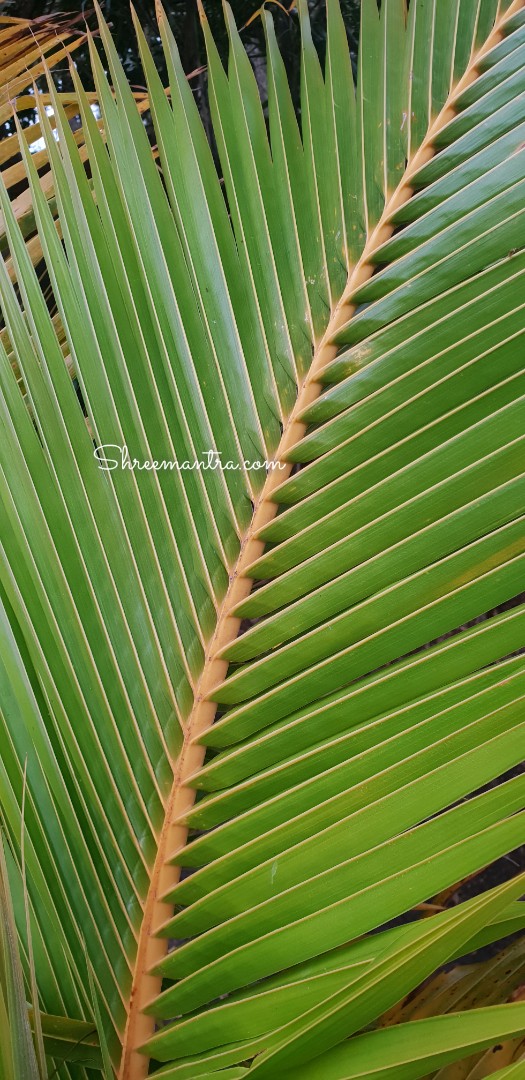
Coconut palm is considered Kalpa Vriksha, or the Tree of life, a mythological tree that provides us, all the necessities of life. The coconut is an integral part of every Hindu ritual. It is also abundantly used in Ayurveda as a base oil. Southern part of India depends hugely on coconut for almost all meals. But lets go a bit further into the past.
Historical relevance
The great Indian epics, Ramayan and Mahabharat mention coconuts. Sushrutha Samhita talks of the use Coconut. Ancient religious texts such as Vishnu purana and Dharma shastra also cite Coconut or Narikela as it is known in Sanskrit. Matsya Purana considers coconut palm as one of the auspicious trees to plant in a garden.
Marco Polo (1254-1324)during his travels in India, Sumatra and the Nicobar Islands called them the “Pharaoh’s nut”, referring to the fact that 6th century Arab merchants brought some to Egypt from East Africa where they flourished.
Coconut is mentioned in the Mahawamsa,the historical chronicle of Sri Lanka (1st century BC)
The 15th century agricultural treatise “Krishi Gita” which contains verses of Indigenous agricultural practices of ancient Kerala speaks thus of Coconut:
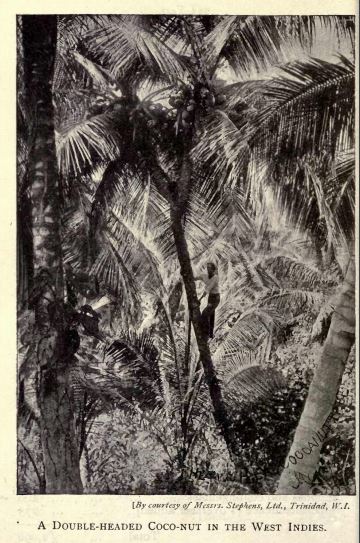
Among the different types of coconut, “Cheruthenga” with small nuts and “Dhruvam”, the exotic variety with more coconut water are popular. The Type called the “Gowripathra” is not seen outside of Kerala and has 2 variants- Kannikooran and Kumbhakudavan
Krishi Gita
Coconut also finds mention in Kashyapiyakrishisukti (800 AD) , an ancient treatise on Agriculture.
Brahma Purana and Agni Purana consider it a medicinal plant and for use in religious rites. Matsya Purana and Brahma Vaivarta Purana consider it a forest plant.
The presence of coconut fruits have also been mentioned by Greek Physician Cstesias (415BC)
Chinese pilgrim Yuan Chwang mentioned the occurrence of coconut in Assam in his travelogue (640AD)
Babarnama 1483 – 1530 refers to it as Hindi-nut and found resemblance to the date palm and also to walnut in having a green outer fibrous husk
Tholkappiyam , the most ancient and and extant work of Tamil literature and linguistics written by Tholkappiyar (200 BC) speaks of planting intercrops ginger and turmeric in coconut and Jackfruit plantations.
Ain -i- Akbari the 16 century detailed document which has records of the administration at the time of the Mughal empire under Emporer Akbar provides prices of coconuts amongst other fruits and vegetables.
What’s even more interesting is that the people of Indus valley civilization also used Coconuts.
The list goes on and on, but lets go further back…
Going by archaeological information the coconut palm evolved more than 20 million years ago – A fossil fruit resembling Cocos nucifera of the family Arecaceae was found from early Eocene sediments of Gujarat as well as Rajasthan.
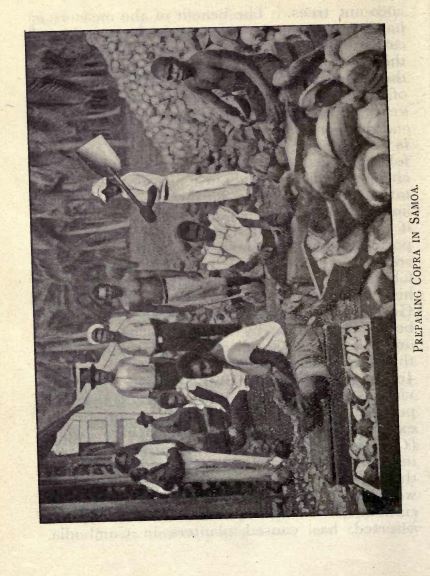
Some old interesting photographs

Its unending uses
There is an Indonesian saying on the usefulfulness of coconut…
“There are as many uses for a coconut tree as there are days in a year “
Grated kernel, water, the cream and milk, oil extracted from the kernel, toddy or liquor, coir for ropes, mats, beds, stuffing in pillows, doormats, spoons, instruments, toys ,the dry leaves for thatching etc. The list of the different uses of a coconut palm goes on.
The husk and shells are used as fuel and for charcoal. This activated charcoal from the shell is considered superior to other types of charcoal. This is mainly because of small macropores which makes it more effective for the absorption of gas and vapor It is also useful for removal of colour, impurities, oxidants and odour .
Activated charcoal from coconut shell are better water purifyers. This is because there is a predominance of micro-pores in coconut shell carbon. This gives it a tight structure and provides excellent mechanical strength and hardness. This in turn leads to high resistance to wearing away by friction.
In Kerala the fresh husk of coconuts servesd as dish sponge and body scrub.
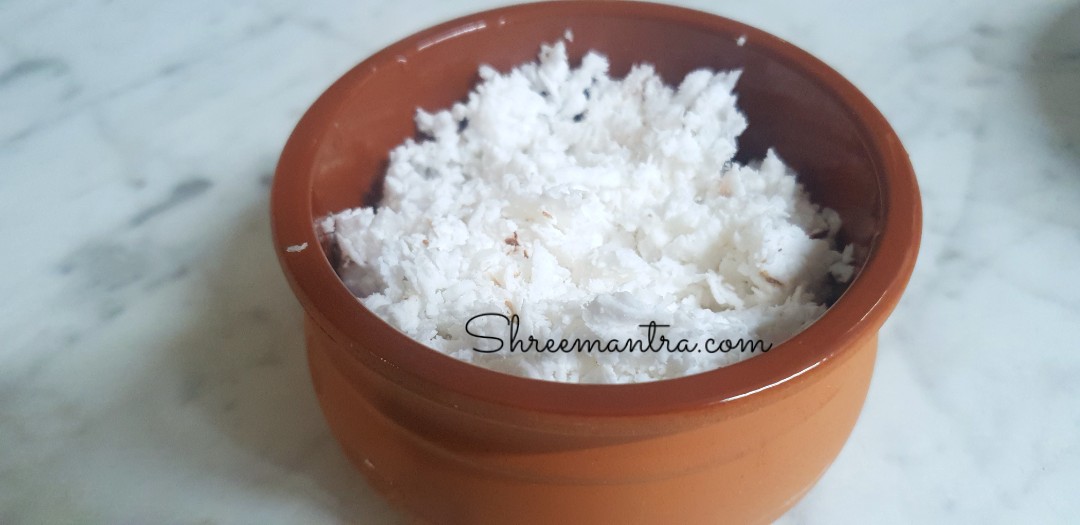
South India and Sri Lankan food use coconut extensively. Chutney, Avial,Pulisheri,Thoran,Poriyal etc are some of the commonly made dishes.
Now that you may have gained a new found respect for Coconut, lets look at a quick recipe right here
The magic in coconuts
So what’s all the craze for coconuts about? why has it always been given such respect right from ancient times.
The answer lies in the astounding medicinal benefits this popular tropical tree holds.
- Dietary fibre – is basically edible parts of plants that are resistant to digestion and absorption in the human small intestine with complete or partial fermentation in the large intestine. Coconut contains a massive 61% of dietary fibre. Our bodies do not digest the fibre content of coconut which also means that no calories are derived from it. Consuming coconut therefore helps in clearing out the intestines providing adequate roughage.
- Medium Chain Fatty Acids(MCFA) – Free fatty acids are present in coconut oil .These free fatty acids (FFAs) are rich in medium chain fatty acids (MCFAs) and lauric acid takes the highest percentage about (46–48%)within this group. What is special about MCFAs in VCO is that they are easily digested and absorbed. MCFAs are directly absorbed from the intestine and burned in the liver. this indirectly causes them to be cardio protective. Studies have also proved the anti fungal (against Candida albicans,Yarrowia lipolytica) and anti-bacterial (Escherichia coli, Clostridium difficile) activity of Medium chain fatty acids present in virgin coconut oil. This makes coconut milk and oil a very good agent to help protect the stomach against harmful bacteria
- Anti inflammatory agent – When studies were conducted to determine whether virgin coconut oil had anti-inflammatory activity, it was found that it could alter the expression of several genes concerned with inflammatory response and had skin beneficiary effects. It also demonstrated that applying virgin coconut oil improves skin barrier function and also protects against UVB irradiation. This also leads to virgin coconut oil being useful in treating skin disorders with permeability barrier dysfunction, especially those accompanied by reduced epidermal protein expression, such as atopic dermatitis, eczema.
Let this be the beginning of a re-discovery for you.
Coconut has been and will be mans best friend. Utilize coconut in your daily life and see the difference for yourself. And do let us know how it went.