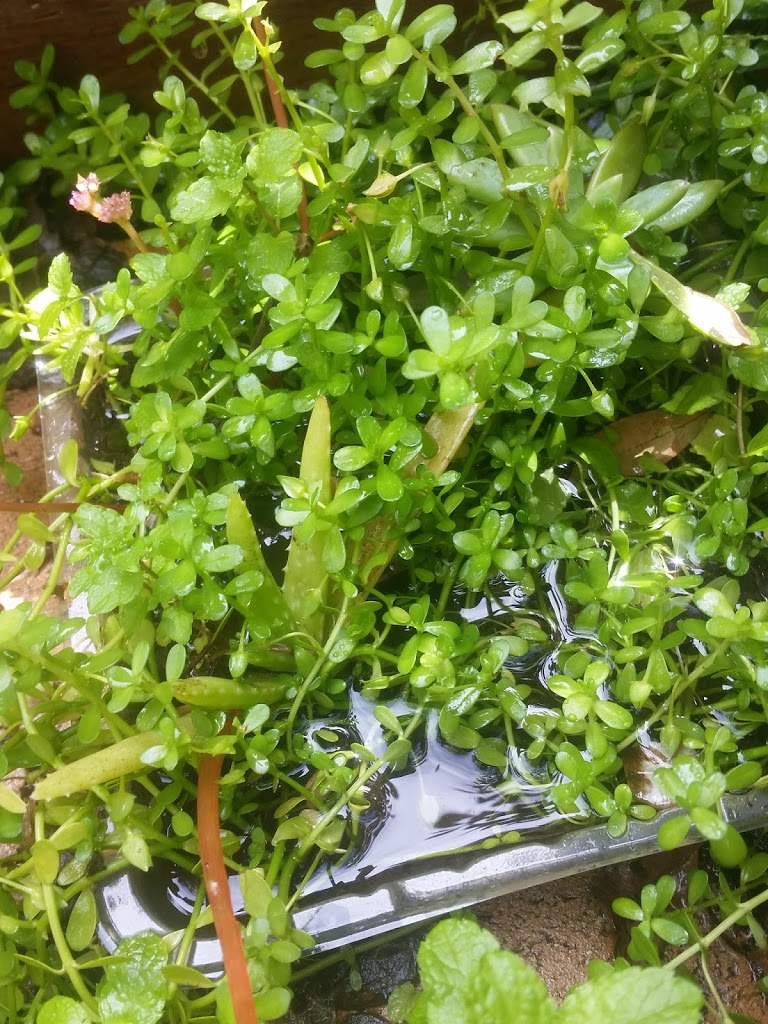
This is Indian Borage , scientific name – Plectranthus amboinicus, known by other names such as Patta Ajwain, Panikoorka etc.Leaves are fleshy, green and hairy. It is a herbaceous aromatic plant used extensively in Ayurveda. This weak stemmed perrenial is a good medicine for fevers and cough. It is quite popularly given to small children to reduce fever.
A few fresh leaves of this herb should be warmed up on a pan This will instantly soften it.The juice can then be easily squeezed out and a few drops given to babies to reduce fever. It can also be applied on the chest and forehead for bringing down a fever. Steam inhalation of the leaves in water is also very useful in treating nose block and sinus issues. The juice mixed with honey is very useful in treating cough and rhinitis.Diarrhea and flatulence can also be controled with this simple looking herb
The therapeutic and nutritional properties this herb has is attributed to its natural phytochemical compounds,highly valued in today’s pharmaceutical indus.
Plectranthus amboinicus has been found to have anti-Mycobacterium tuberculosis activity .There is also vast evidence of antifungal activity.
The hexane extract of this plant was shown to exhibit anti-inflammatory activity.
When the leaf paste is heated up on a flame and applied to cuts or burns, it acts as an antiseptic and promotes healing.
Different countries that use this herb medicinally and the local names for it.
- Cambodia – Sak dam ray
- China – Da shou xiang
- Fiji – Rhaivoki, Sage
- Germany – Jamaika thymian
- Indonesia – Torbangun, Daun Kutjing
- Malaysia – Daun bangun-bangun
- Philippines – Latai, Suganda
- Vietnam – Can day la
- Thailand – Hom duan huu suea
- South Africa – Sup mint
- Cuba – orégano de Cartagena
- Barbados – Poor man’s pork
- Puerto Rico – Puerto Rican oregano brujo